
Loading…
Serving Rialto, CA and surrounding areas. (909) 546-5589
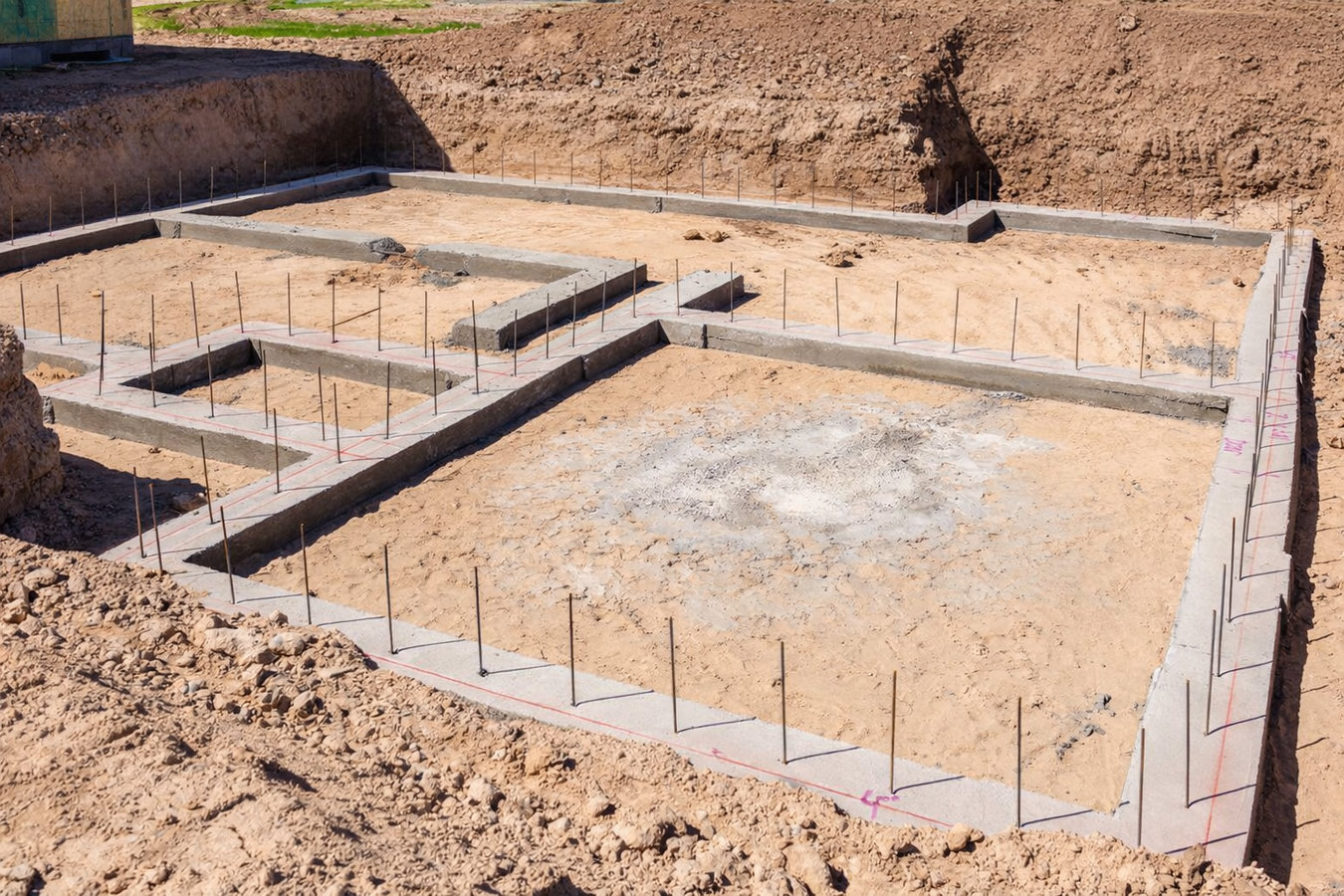
Building a new home, ADU, or addition in Rialto? Your foundation is the base everything depends on. We handle permits, soil testing, and seismic zone requirements for Inland Empire homeowners.
Foundation installation in Rialto involves excavating and preparing the ground, placing steel reinforcement, passing a city inspection, and then pouring a concrete slab or footing system - most residential projects take one to two weeks from excavation to a ready-to-build-on surface, not counting permit review time.
Most homeowners in Rialto starting a foundation project are building a backyard ADU, adding a room or garage, or constructing a new home on a vacant lot. Foundation installation is the step that determines whether the structure above it stays square, level, and solid for decades - or starts showing cracks, uneven floors, and sticking doors within a few years. In the San Bernardino Valley, where expansive clay soils and seismic zone requirements shape every foundation design, local knowledge is not optional.
For commercial or multi-family properties that need paved parking areas over a properly prepared base, our concrete parking lot building service covers the full scope from subgrade prep to final striping.
If you are planning any addition to your home - a new bedroom, a garage conversion, or a backyard ADU - you almost certainly need new foundation work before anything else can be built. In Rialto, where ADU additions have become increasingly common, this is often the first step homeowners do not realize they need to plan for. No framing, no walls, and no roof can go up safely without a proper foundation underneath.
If doors or windows that used to work fine are now sticking, dragging, or leaving gaps at the top or bottom, it can be a sign that the ground underneath your home has shifted. In Rialto's clay-heavy soils, this kind of movement is more common than in areas with more stable ground, especially after a wet winter followed by a dry summer. It is worth having a contractor take a look before the problem gets worse.
Small hairline cracks in a concrete slab are normal and usually harmless. But if you notice cracks that are wider than about an eighth of an inch, cracks that run diagonally from the corners of doorways, or cracks where one side is higher than the other, those are signs of more significant movement. In older Rialto homes built on original slabs from the 1960s or 1970s, these patterns are worth taking seriously.
Rialto does not get a lot of rain, but when it does, water that pools against your foundation or flows toward the house rather than away from it is a warning sign. Over time, water intrusion can weaken the soil beneath a slab and accelerate cracking. If you notice standing water near your foundation after a storm, it is worth having a contractor assess whether grading or drainage improvements are needed alongside any foundation work.
We handle every phase of foundation installation - site assessment, permit application through the City of Rialto Building and Safety Division, soil testing coordination, excavation, gravel base installation, moisture barrier placement, steel reinforcement, and concrete pouring and finishing. Whether you are building a modest ADU or a full new home, we size the reinforcement, footing depth, and drainage to your specific site conditions and the city's engineering requirements - not to a generic template.
For homeowners planning smaller structures or simpler residential additions on stable ground, our slab foundation building service covers straightforward concrete pours with full permit handling and inspection coordination. Pairing foundation work with other concrete projects in a single visit saves you crew mobilization costs and keeps your project on schedule.
Full slab-on-grade or raised foundation systems for new construction on vacant lots - includes engineered plans and full city permit coordination.
For backyard ADUs, room additions, and garage conversions where the foundation needs to meet current residential code and tie into existing structures.
For homes in Rialto's mid-century neighborhoods where the existing slab is beyond repair and needs to be removed and replaced - includes breaking up old concrete and starting fresh.
Rialto sits in the San Bernardino Valley, where the soil contains clay minerals that swell when they absorb water and shrink when they dry out. That seasonal movement is one of the most common causes of foundation problems in the Inland Empire - cracks, uneven floors, and sticking doors all trace back to soil that was not properly prepared or a slab that was not adequately reinforced. Foundation installation in Rialto requires a gravel base layer for drainage, proper compaction of the subgrade, and steel reinforcement that holds the slab together as the ground shifts. Our crews working throughout Rialto and nearby Pomona see these conditions on nearly every project.
Rialto also sits near several major fault systems in Southern California, and the state's building code requires foundations in this area to meet specific seismic design standards. Those standards affect how deep footings must go, how much steel reinforcement is needed, and what kind of connections are required where the foundation meets the structure above. The American Concrete Institute sets the national standards for steel placement and concrete strength, and the City of Rialto Building and Safety Division enforces those standards through the permit and inspection process. Many Rialto homeowners are adding ADUs or converting garages into living space right now, which means there is steady demand for contractors who understand how to navigate the city's approval process and build foundations that pass inspection on the first try.
Call or message us with what you are building, the approximate size, and whether you already have plans drawn up. We schedule a free on-site visit to assess soil conditions and site access. Expect the estimate process to take a few days to a week once the site visit is complete.
We apply for a building permit through the City of Rialto Building and Safety Division. In many cases, the city also requires a soil report - a test that tells the engineer what is actually in the ground beneath your property. We handle most of this paperwork, but expect this phase to take one to three weeks depending on the city's current workload.
Once permits are approved, we mark out the foundation area, excavate to the required depth, and prepare the soil - compacting it and adding a gravel base layer to improve drainage and stability. Plan to keep children and pets away from the work area, and expect some disruption to your yard or driveway access.
Before any concrete is poured, we install the steel reinforcement inside the prepared area. At this point, a city inspector visits to verify that everything is in place correctly - this inspection must happen before the pour, so the inspector can see what will be buried inside the concrete. We schedule this inspection; you do not need to do anything except be available if the inspector has questions.
Concrete trucks arrive and the crew pours and finishes the slab. In Rialto's summer heat, this often happens early in the morning to avoid the worst of the heat. After the pour, the concrete needs several days to cure before it is strong enough to build on. We may wet the surface periodically to slow the drying process. A final inspection is typically required before framing can begin.
Free written estimate. We handle permits and inspections. No surprise charges at closeout.
(909) 546-5589The clay-heavy ground in the San Bernardino Valley moves with the seasons, and a foundation that ignores that fact will show cracks within a few years. We prepare the soil correctly, use the right amount of steel reinforcement, and do not cut corners on the steps that protect your slab from the ground movement that is simply part of living here.
Rialto's permit and inspection process has specific steps that have to happen in the right order. We handle the permit application, coordinate every required inspection, and keep you informed so your project stays on schedule and nothing gets built that has to be torn out and redone.
We work on foundation projects in Rialto neighborhoods every week and know the permit timelines, summer curing requirements, and local soil conditions firsthand. That experience shapes every decision from footing depth to reinforcement spacing on your project.
We give you a written, itemized estimate after seeing your property in person, and we explain every line so you understand what you are paying for and why. If something changes during the job, we tell you before we do it - not after.
The California Contractors State License Board sets the licensing and insurance requirements every contractor must meet to work in California. You can verify any contractor's license, complaint history, and insurance status in about two minutes using the CSLB's online lookup tool. Working with a licensed contractor who pulls permits and passes inspections means your foundation is documented, code-compliant, and protected if anything goes wrong.
For commercial and multi-family properties that need durable parking surfaces over properly prepared foundations and base layers.
Learn moreFor residential slabs designed specifically for Rialto's clay soils, seismic zone requirements, and hot-weather curing conditions.
Learn morePermit slots and contractor availability fill up fast during the spring ADU season - call or message us now to secure your timeline.