
Loading…
Serving Rialto, CA and surrounding areas. (909) 546-5589
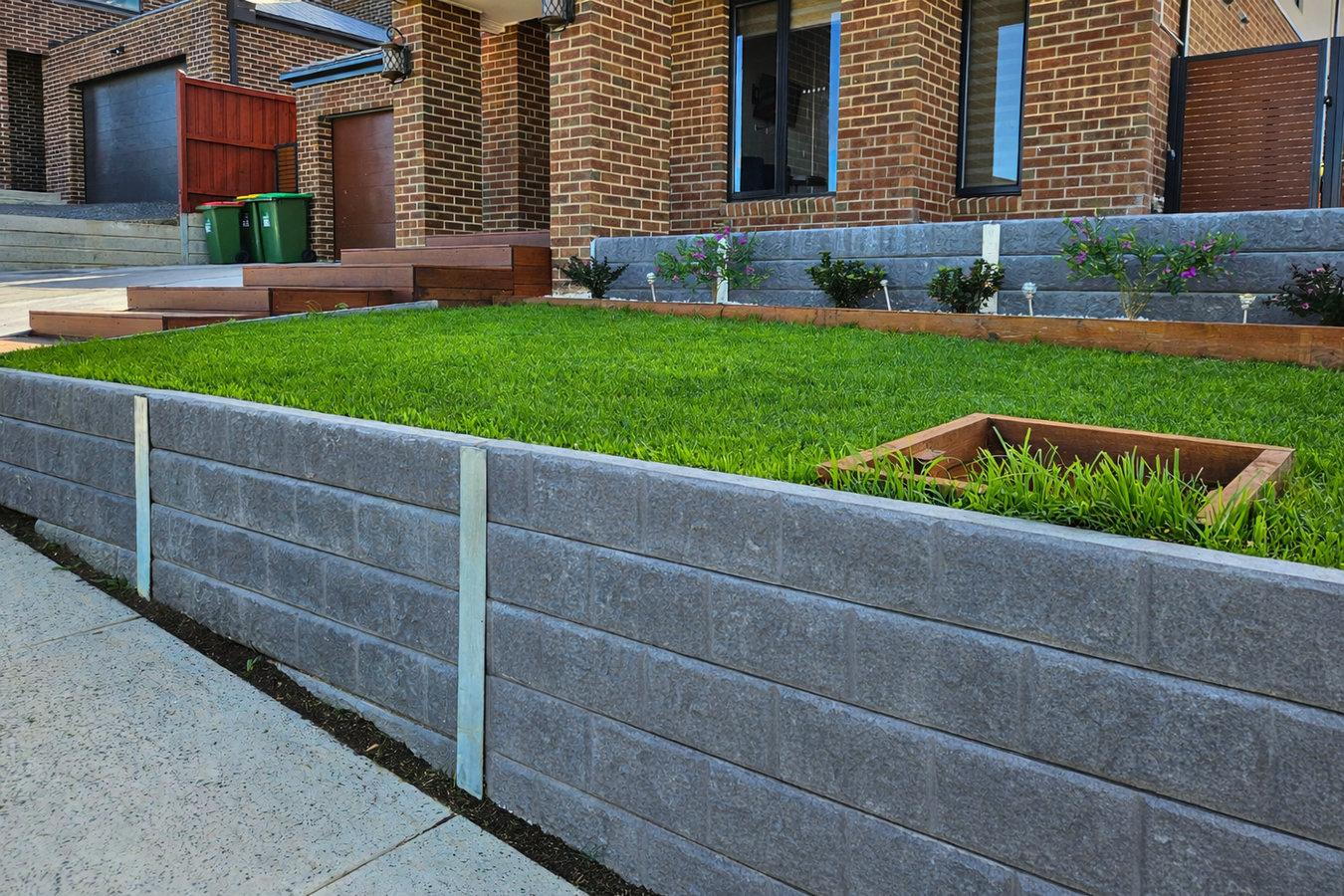
Sloping yard washing out every winter? A properly built concrete retaining wall holds your soil in place, creates usable flat space, and handles Rialto's clay soils and rainy-season water pressure.
Concrete retaining walls in Rialto are built by excavating the area, pouring a deep footing, constructing the wall with drainage material installed behind it, and backfilling with compacted soil - most residential walls take two to five days on-site, not counting permit review time for taller walls.
Most homeowners in Rialto call us after watching soil migrate downhill every winter, after noticing an existing wall has started to lean, or because they want to turn a sloped section of the yard into a flat, usable space. Concrete retaining walls in Rialto need to be built for two conditions that are unique to this area - the clay-heavy soil that moves with every wet and dry cycle, and the heavy winter rain events that send water pressure spiking behind any wall that was not properly drained.
If your project includes creating a flat outdoor area once the slope is held back, you may also want to look at our concrete floor installation service - combining a retaining wall with a new slab in the same project saves on crew mobilization and gives you a cleaner result.
If you notice dirt, mulch, or gravel collecting at the bottom of a slope in your yard after Rialto's winter rain events, that is erosion happening in real time. Over several seasons, that lost soil can expose roots, undermine landscaping, and eventually threaten structures nearby. A retaining wall stops that movement permanently.
A retaining wall that tilts toward you - even slightly - is telling you the soil pressure behind it is winning. Diagonal cracks, gaps between blocks, or sections that bow outward are all signs the wall is under stress it was not designed to handle. In Rialto's clay-heavy soils, this kind of movement often accelerates once it starts.
If you want to create a flat, usable space on a sloped part of your yard - for a patio, a pool deck, or a raised planting area - a retaining wall is what makes that possible. Without one, any fill soil you bring in will gradually migrate downhill. This is one of the most common reasons Rialto homeowners invest in a new wall.
When a slope directs water toward your house instead of away from it, that moisture can work into your foundation over time. If you notice standing water near your foundation after a storm, or damp patches on interior walls at ground level, a retaining wall combined with proper grading may be part of the solution.
We handle the full scope of a retaining wall project - site assessment, permit application, utility marking through the 811 service, excavation, footing pour, wall construction, drainage installation, backfill, and city inspection coordination. Whether you need a low garden-bed wall or a taller structural wall that requires an engineer's stamp, we size the project to what the site actually needs rather than what is easiest to build, including a block retaining wall built to hold back grade changes of any height.
Many homeowners who build a retaining wall also add concrete steps construction to create safe, accessible transitions between the newly leveled area and the rest of the yard. Building both at the same time means the steps are properly tied into the wall structure from the start.
Cast in place as a single solid piece. Best for walls that need maximum strength or that will carry a load from a structure above.
Built course by course with standard concrete masonry units. Suits homeowners who prefer a more traditional block appearance or need flexibility in the layout.
Lower walls under four feet that define planting areas or create raised beds. Often do not require a permit, making them faster to build.
Rialto sits on clay-heavy soil that swells when it rains and shrinks in the summer heat - that constant movement is the primary reason walls built without proper footings and drainage fail faster here than in areas with more stable sandy soil. When winter storms hit, the soil behind a poorly designed wall can absorb enough water to triple the pressure against the structure in a matter of hours. A wall that handles those conditions needs a footing deep enough to anchor in stable ground, gravel backfill to let water escape, and perforated drain pipe to carry that water away from the wall entirely. The Portland Cement Association and the American Concrete Institute both document drainage as the most critical factor in long-term wall performance.
Rialto also sits in an active seismic region, and for taller walls the city requires a structural engineer to sign off on the design. We navigate the City of Rialto Building and Safety Division permit process regularly, and we serve homeowners across Rialto and neighboring San Bernardino, where soil and seismic conditions are similar. If your project is in an HOA neighborhood, we can also work within those design guidelines once you have confirmed them with your association.
Call or message us with your address and a few photos of the slope or existing wall. We schedule a free on-site visit to measure, assess the soil, and talk through your options. A written estimate follows within one business day, breaking down labor, materials, and any permit fees separately.
For walls that need a city permit - which in Rialto generally means taller walls - we submit plans to the City of Rialto Building and Safety Division before any work begins. Review time varies, but we handle the process entirely. We give you a start date once the permit is approved.
We call 811 to mark utilities before any digging, then excavate for the footing, pour it, and build the wall. Drainage material goes in behind the wall as it goes up so water has somewhere to go after rain. A standard residential wall typically takes one to three days to build.
If a permit was required, the city inspector visits at key stages to verify the work meets code. Once passed, we backfill and compact the soil behind the wall and clean up the site. We walk you through the drainage outlet locations and what normal settling looks like before we leave.
No obligation. We visit the site, assess the slope and soil, and give you a clear written quote - including permit fees - within one business day.
(909) 546-5589Every permitted retaining wall in Rialto requires a city application, plan review, and inspection. We handle all of it - from submitting the paperwork to coordinating the inspector's visit. You get a fully documented, code-compliant wall and the records to prove it.
The most common reason retaining walls fail early is water pressure building up behind them. We install gravel backfill and perforated drain pipe on every wall so that after Rialto's winter storms, water escapes instead of pushing against the concrete.
We work in Rialto neighborhoods every week and know the clay soil conditions, seismic zone requirements, and HOA landscapes across the city firsthand. That local experience shapes every design and footing depth decision we make.
We give you a written quote covering labor, materials, drainage, and permit fees before we start. The final invoice matches what you were told. If something unexpected comes up during site prep, we tell you before we act on it - not after.
Every retaining wall we build is designed specifically for the soil and slope conditions on your property - not sized down to save materials. That approach is why walls we build hold up through Rialto winters instead of leaning forward two seasons later.
Once the slope is stabilized, a new concrete floor gives you a flat, durable surface to build on in your garage or patio area.
Learn morePair a retaining wall with concrete steps to create safe, code-compliant access between level changes in your yard.
Learn moreRialto's rainy season is not far off - contact us now to get your retaining wall project assessed and scheduled before the next storm puts more pressure on your slope.