Loading…
Serving Rialto, CA and surrounding areas. (909) 546-5589
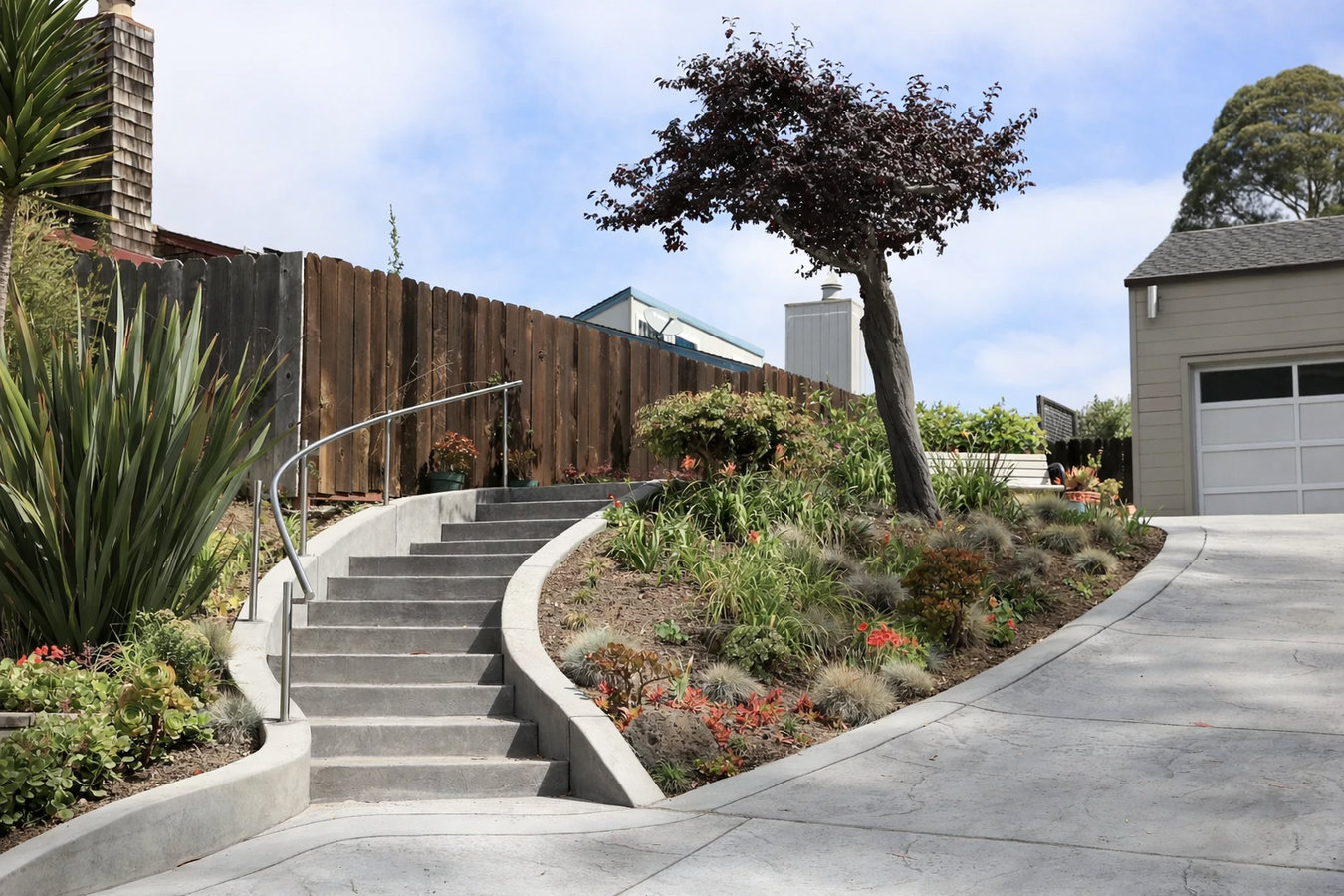
Cracked, pulling away from the house, or uneven underfoot? New reinforced concrete steps handle Rialto's shifting clay soil and last decades without constant repairs.
Concrete steps construction in Rialto involves demolishing old steps (if applicable), preparing a compacted gravel base, setting wooden forms, placing steel reinforcement rods, pouring the concrete, and finishing the surface with a textured grip - most residential jobs take one to two days on-site, with a 24-to-48-hour wait before you can walk on them.
Most Rialto homeowners call us when they notice a crack widening across a step, a growing gap where the steps meet the house, or steps that rock slightly when they walk on them. These are all signs that the ground beneath has shifted - which happens regularly in Rialto's clay-heavy soil. The steps may still look okay from a distance, but the structural problem underneath is already in progress.
Many customers also ask about slab foundation building when replacing their steps, since both involve working near the home's foundation and the same crew can assess everything in a single visit - saving time and coordination.
If you can see a crack that runs all the way across a step - especially one wide enough to fit a coin in - the structural integrity of that step is compromised. Cracks like this are common in Rialto homes where the clay-heavy soil has shifted over the years, putting stress on steps that were not built with reinforcement. A crack that started small and is now wider than it was last year is a sign the problem is getting worse, not stabilizing.
When steps begin to pull away from the house, you will see a growing gap at the point where the steps meet the foundation or door threshold. This happens when the ground beneath the steps shifts - something that occurs regularly in Rialto's expansive soil conditions. That gap collects water, which accelerates the separation and can eventually damage the door frame or foundation edge.
If any step feels like it rocks slightly when you step on it, or if the height from one step to the next feels inconsistent, the steps have likely shifted. This is a tripping hazard - especially for children and older adults - and it tends to get worse over time, not better. Steps that feel solid one season and uneven the next have usually been undermined by soil movement beneath them.
When the top layer of concrete begins to flake off in thin chips, the surface is deteriorating from the inside out. In Rialto, this process is accelerated by years of intense sun exposure and the occasional freeze on cold winter nights, which causes moisture trapped in the concrete to expand and push the surface apart. Once the surface starts flaking, it will continue - and the exposed concrete underneath absorbs water faster, speeding up the damage.
We handle every part of the job - permit application, demolition and haul-away of your old steps, ground preparation with a compacted gravel base, wooden formwork, steel reinforcement placement, pouring, surface finishing, curing, and city inspection coordination. Every set of steps we build includes internal rebar and a textured surface finish as standard. We match the step dimensions to your door threshold so every step feels consistent underfoot.
Customers whose steps connect to a sloped yard or raised planting area often ask about concrete retaining walls at the same time. A wall and steps built together share the same ground prep and crew visit, which tends to produce a cleaner finished result than doing them at separate times.
A brushed, textured surface for grip in all conditions. The most practical and affordable option for front and back entries in Rialto.
Patterns pressed into the wet concrete before it sets. Suits homeowners who want the look of stone or brick without the cost of natural materials.
Integral pigment added to the mix for a warmer or coordinated finish. Works well when matching an existing concrete patio or walkway.
Rialto sits on clay-heavy soil in the San Bernardino Valley. That soil expands when wet and contracts when dry - and that movement is the main reason concrete steps crack, shift, and pull away from houses throughout the city. A large share of Rialto's housing stock was built between the 1960s and the 1990s, meaning many original steps are now 30 to 60 years old and were built without the reinforcement methods used today. By the time steps start looking bad on the surface, the structural problem has usually been building for years underneath. Steps built with internal rebar and a properly compacted base handle this soil movement far better than steps poured on bare, uncompacted ground.
We also know Rialto's seasonal conditions well. The Santa Ana wind events that roll through each fall deposit a layer of fine dust on every outdoor surface - and smooth concrete steps can become surprisingly slippery when that dust settles. We work regularly throughout Rialto and San Bernardino and build steps with textured finishes as standard because it's the right call for this climate, not an upgrade.
When you reach out, we'll ask a few basic questions - how many steps you have, whether they are attached to the house, and whether you want the old steps removed. We offer a free on-site estimate, which is worth taking us up on because the price can vary significantly based on what we find when we actually look at the site. You'll receive a written quote that breaks down labor, materials, and any demolition costs separately.
Before any work begins, we walk the site and check what is underneath and around the existing steps. In Rialto, this includes looking at the soil condition and how the steps connect to the foundation. If a permit is required - which it often is for steps attached to the home - we handle the application with the City of Rialto Building and Safety Division and let you know the approval timeline before scheduling the work.
The crew demolishes the old steps (if applicable), hauls away the debris, and prepares the ground with a compacted gravel base. In Rialto's warm climate, the actual pour is almost always scheduled for early morning to avoid the afternoon heat, which can cause the concrete to dry unevenly. The crew builds a wooden form, places steel reinforcement rods inside, fills it with wet concrete, and textures the surface before it begins to set.
After the pour, plan to use a side or back door for at least 24 to 48 hours. In Rialto's dry heat, we apply a curing compound or cover the steps to keep moisture in while the concrete hardens. Once cured and the permit inspection (if required) is complete, we walk you through the finished work and explain what the steps need going forward.
We'll visit your Rialto home, look at what you have, and give you a written quote covering demolition, materials, labor, and permits. Estimates returned within one business day.
(909) 546-5589The City of Rialto Building and Safety Division requires permits for exterior structural work, including steps attached to the home's foundation. We handle the permit application and inspection coordination on every job, so you don't have to navigate city paperwork. Your project will be fully documented - which matters when you sell the home.
Every set of steps we build includes internal steel reinforcement designed to hold the concrete together as the ground shifts beneath it. This is one of the most important factors in whether Rialto steps last 5 years or 30 years. Rialto's clay soils move more than homeowners realize, and steps without rebar fail much faster in this environment.
We've been building concrete steps throughout Rialto and the surrounding Inland Empire since 2023 and know the local soil conditions, permit process, and seasonal pour protocols. Summer pours are scheduled for early morning to prevent the rapid drying that weakens concrete in Rialto's triple-digit heat.
Every set of steps we install gets a brushed or textured finish as standard - not an upgrade. Rialto's Santa Ana wind events deposit fine dust on outdoor surfaces that can make a smooth step dangerously slippery. A textured surface gives real grip in the conditions homeowners here actually deal with.
We bring the same ground-prep discipline to every steps project we take on in Rialto because we've seen what happens when it's skipped. For more on concrete construction standards, visit the American Concrete Institute or the Portland Cement Association's curing guide. For Rialto permit requirements, the City of Rialto Building and Safety Division has current information on what applies to your specific project.
Concrete slab foundations poured with proper reinforcement and drainage for Rialto's clay-heavy soil conditions.
Learn moreRetaining walls that hold back soil on sloped lots and work alongside steps to create a safe, level entry area.
Learn moreNew steps take one to two days on-site. Call now to get your project on the schedule before the summer heat window fills up.